Category: Uncategorized

  • Why Mortgage Rates are Holding Steady

    Why Mortgage Rates are Holding Steady


    Expectations for a drop in mortgage rates in the coming months have shifted as new economic data has arrived. Inflation at 3.4% (annual, as of April) remains stubbornly above the Fed’s 2% target. The Fed is unlikely to reduce rates until they’ve seen multiple positive (lower) inflation readings — unless other economic indicators take a nosedive. Watch the labor market in particular.

    This Spring, the Fed signaled that they’d continue to hold their benchmark rate level, so mortgage rates, which were trending down in anticipation of lower future rates, did an about-face and popped up over the 7% mark. Recent softening in the Core Consumer Price Index (which strips out volatile food and energy prices), and softer jobs data has lowered the 10-year bond rate, and with it, we saw improved mortgage rates during the first half of May. A bit of wiggle room for buyers!

    At the same time, the tight housing inventory situation continues, so prices are firm and continuing to rise (though not quite as quickly). For the first quarter of 2024, median home prices are up 5% nationally, versus last year. “Astonishingly, greater than 90% of the country’s metro areas experienced home price growth despite facing the highest mortgage rates in two decades,” NAR chief economist Lawrence Yun said.

    The reason? Get used to it — not enough housing inventory on the market. The number of move-up buyers as well as downsizing retirees, has been below normal — in part due to “mortgage lock,” the 40% of homeowners who are sitting tight with a near-3% loan obtained back when rates were at record lows. Some of these potential sellers are reluctant to list their home when their next mortgage would be a more expensive one. Another factor is that new construction isn’t adding enough overall supply to meet housing market demands.

    What’s ahead? Experts predict a continued cool-down in the market, with a slower pace of price appreciation. On the mortgage rate side, investors currently see a 50% chance of a Fed rate cut in September, and most experts believe that mortgage rates will end 2024 in the 6.5% to 7% range – again, depending a lot on inflation and the labor situation.

    Our advice? Don’t get caught waiting for rates to drop a lot. Because when they do, there is likely to be a flood of pent-up demand entering the market, and sharply higher home prices. If you’re interested in buying, it’s usually better to get ahead of the market and pay a higher mortgage rate for a while, then refinance when the time is right. Remember, it’s “time in the market” versus “timing the market.” Give us a call today to discuss your goals, and we’ll help you craft a home financing plan that’s a winner regardless!

    Get the latest mortgage industry news. Click here.

    Copyright © 2024 Myers Capital Hawaii

  • Mortgage Newsletter Summer 2024

    Mortgage Newsletter Summer 2024

    Get the latest mortgage industry news. Click here.
    – Economy & Mortgages: Why Rates are Holding Steady?
    -Converting Equity Into Renovations: Sizing Up the Possibilities  
    -Tackling Affordability Challenges: The Non-Occupant, Co-Borrower Strategy
    -Down Payments for VA Loans 
    -APR Explained 

    Economy & Mortgages: Why Rates are Holding Steady?

    Converting Equity Into Renovations: Sizing Up the Possibilities

    Homeowners today are enjoying a record level of home equity, built up by faster appreciation, low-cost loans from a few years back, and staying-put-longer trends. Naturally, we get a lot of inquiries about tapping this equity for renovations, and upgrades.

    We like to help clients break it down into not just “needs” and “wants” but when it makes sense to do each. Mandatory projects that should happen right away: This includes addressing deferred maintenance like dry rot, foundation problems, mold remediation, roofing problems, wiring or plumbing issues, sagging floors, and more. It is usually more cost-effective to get it done than let the problems worsen. This keeps your home livable and healthy, and protects its value. If you plan to sell, these are projects you generally cannot ignore.

    Life-stage projects: These may include renovations or upgrades that are part of life stage change – – adding a work-from-home office, adding a bedroom or bathroom as your family expands, or adding an ADU for an aging relative to live in. They’re elective in that you can choose not to do these, but life gets challenging if you don’t.

    Elective projects: These include entertainment rooms, landscaping, kitchen upgrades, upgraded fixtures or windows, and cosmetic upgrades to a home. These things improve the enjoyment you derive from living in your home, and they can be done on your timetable.

    Someday-sell-it projects: Time your upgrade to match your time horizon. Tastes change constantly among homebuyers, and renovations done years beforehand may not age well.

    Some projects may make sense closer to the time you sell. On the other hand, if you have a long time horizon, why wait? Renovate now and enjoy your upgraded digs for years to come! We can help you finance any of these. There are ample programs available. We can consider home equity loans, home equity lines of credit, renovation loans, cash out refinances, loans for energy efficiency upgrades, and more.

    The important thing to remember is that timetables always run longer than you might like, and good contractors are always busy. So let’s get a conversation started sooner than later, so that you can enjoy the benefits faster!

    Tackling Affordability Challenges: The Non-Occupant, Co-Borrower Strategy

    Today’s tight market, higher prices, and higher interest rates can seriously challenge many prospective homebuyers. One option buyers can use to improve their purchasing power is to team up with a family member or close friend who will be a co-borrower, but who will not live with the homeowner – a non-occupant co-borrower. Non-occupant coborrowers are allowed with conventional mortgages, FHA loans, and select other programs.

    The non-occupant co-borrower is more than just a co-signer. The lender considers their income, debts, and credit history along with the homebuyer’s. This can help the homebuyer qualify for the loan, but it also means the non-occupant co-borrower is jointly responsible for making those monthly payments.

    Unlike a co-signer, the non-occupant co-borrower usually goes on the title of the property with the primary homebuyers. This gives them a stake in the ownership of the property, including any upside if it appreciates (and the opposite as well). There can also be tax benefits if they help with payments (please involve your tax advisor!) Generally, there are no restrictions preventing a non-occupant co-borrower from moving into the home later. A non-occupant co-borrower can exit the loan in a refinance, where the homebuyer gets a new loan on their own.

    What it takes.

    ► An honest assessment beforehand. Whether you play the role of the homebuyer or the non-occupant co-borrower, it’s critical to assess risks from both sides. This isn’t something that you can do on your own, at least objectively. Talk to us, and we can help all parties make an honest assessment of incomes, creditworthiness, assets, and more. The co-borrower’s other debts affect the loan decisioning, so you want to know if the addition of the co-borrower’s financials are strong enough to lift the homebuyer’s chances.

    ► A close relationship is key. The non-occupant co-borrower and the homeowners must be great communicators and work in concert to fulfill their obligations. In some cases, the non-occupant co-borrower is contributing a portion of the payment. It’s important that there is good communication about whether, how much, and when any actual support is required, because they’re jointly on the hook if payments are late or missed altogether.

    Credit scores for both parties are affected, and in the case of a foreclosure, both parties are of course affected.

    ► A commitment to homeownership. Beyond making payments on time, it’s important to share a commitment to taking care of the property. Deferred maintenance can lower the value of the property, which affects both parties in the long run, when it comes time to sell.

    Co-borrowing can be a great tool to help a family member or close friend achieve their dream of homeownership. We can help borrowers fully understand all the risks and responsibilities involved. When done right, this can be a win-win for everyone involved! Contact us to get started.

    Down Payments for VA Loans

    VA loans do not require a down payment or mortgage insurance, but making a down payment is allowed. In doing so, you can offset the VA funding fee to some degree. The VA funding fee is a one-time fee that is charged in most cases, which lowers the cost of the loan for taxpayers.

    For a $300,000 loan, a down payment of 0%-4.99% triggers a funding fee of 2.15%, or $6,450 (3.3% if this is not your first VA loan). Raise your down payment to between 5% – 9.99%, and that fee shrinks to 1.5%, or $4,500. Make a down payment of 10% or more, and the fee drops to 1.25% or $3,750.

    Consider making a down payment for these reasons:

    • Savings! A 5% or 10% down payment cuts your fee funding fee by 0.65% or 0.90%, respectively. On a $300,000 loan, that equates to up to $2,700 in savings! And you’re achieving that by putting up equity, which is ultimately yours to keep.

    • You’re borrowing less. That means a lower monthly payment, and potentially a better rate.

    • It’s equity. You can tap it in the future, and it offers some protection if home values decline.

    On the other hand, it requires cash – not always easy for first-time home buyers. Many veterans would rather get into the market without waiting to save up the down payment, and it’s possible to finance the funding fees into the loan amount. We can come up with a plan that works for you or a veteran you know. Contact us to discuss the options.

    APR Explained

    Interest rates drive your monthly payment, but they’re not the full measure of how much a loan will actually cost. There are other costs involved: lender fees, discount points, most closing costs, private mortgage insurance, etc. So, we compute an “Annual Percentage Rate,” or APR, which adds these other costs to the interest you will owe, and arrives at a rate that better represents the annual cost of financing. The more “other costs,” the greater the APR is, compared to the basic interest rate. APR allows consumers to more easily compare loans with different combinations of interest rates, points, and fees.

    By law, lenders must always disclose the APR, and as prominently as the rate. This prevents shady lenders from “hiding” loans with lots of extra costs. APR assumes you hold your loan the full term. If you exit earlier, the true APR would be higher, since those extra costs would be applied to fewer years! To get the best perspective, you’ll want to compare loans based on how long you intend to hold them. Give us a call and we can re-run any APR calculation based on your plans!

    Copyright © 2024 Myers Capital Hawaii

  • How to Invest in Out-Of-State Rental Properties

    How to Invest in Out-Of-State Rental Properties


    6 Key Tips for Success
    Investing in rental property can be a solid path to building wealth through real estate. You’ll need to select good areas in which to buy since location is a critical factor in the success of an investment property. Many investors purchase rentals in areas they live in but this may not always be the most profitable option.

    Owning out-of-state rental property has many benefits. A main reason is the return on investment (ROI) may be higher than properties in your own state. Home prices, rental market conditions and regulations, property tax rates, and other factors may be more favorable in another state, which can improve the potential profitability of a rental. High-cost areas and markets with falling real estate prices may not be good choices since they can have lower or negative ROI.

    While any real estate transaction has risks, buying and owning property outside of your area comes with different challenges than other deals. These include a lack of familiarity with the local market, economic conditions, regulations, and unforeseen repairs. It may be harder to find desirable areas with above-market rents and quality tenants, which can affect your ROI.

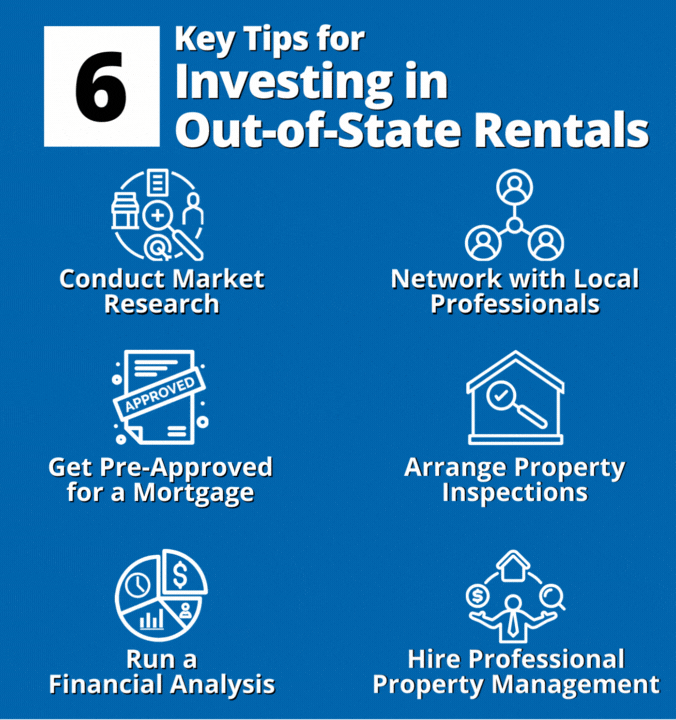
    If you are considering investing in out-of-state properties, doing due diligence is essential to help you make sound choices. Here are six important tips for investors looking to buy out-of-state rental property:


    Conduct Market Research: Thoroughly research target markets. Analyze factors such as housing prices, economic strength, rental demand, and low unemployment to ensure the area has a stable rental market and the potential for property appreciation. You want to choose a growing market that can help you achieve a higher ROI.

    Network with Local Professionals: Build relationships with local real estate agents, property managers, and contractors who can provide valuable insights and assistance throughout the buying process and beyond. They can help you find suitable properties, navigate local regulations, and manage your investment effectively. You can also network with other investors at real estate investor conferences and events that focus in areas you’re considering.

    Get Pre-Approved for a Mortgage: Research financing options and get pre-approved before you start vetting properties. This can help put you in a better bidding advantage especially in a competitive market. It can also help avoid any challenges involved with securing financing outside of your home state.

    Arrange Property Inspections: Set up comprehensive property inspections by a qualified inspector familiar with local building codes and regulations. Inspections can uncover hidden issues that may affect a property’s value or rental income potential. This can help mitigate the potential risks since you may not be able to look at the property in person.

    Run a Financial Analysis: Conduct a thorough financial analysis to determine the potential profitability of the investment. Consider factors such as purchase price, rental income, operating expenses (including property management fees, taxes, insurance, maintenance, and vacancies), financing options, and expected ROI. Be sure the numbers work out before moving forward with an offer.

    Hire Professional Property Management: Find a reputable local property management company to handle day-to-day operations, tenant screening, rent collection, maintenance, and other tasks is more important compared to managing a rental that you can make regular visits. Ask for references from other investors who have used prospective property managers and research online reviews. A good property manager can help protect your investment and maximize returns. It’s a good idea to periodically visit the property to ensure that the property manager is living up to your expectations.

    Whether you are considering your first rental or already have a growing portfolio, buying property out of state can be a good strategy but it also carries greater risk than buying in your home state. After conducting thorough research, choosing an area with a strong housing market can get you a higher return on your investment, allowing you to grow and diversify your portfolio faster. Contact us to discuss financing programs for your next out-of-state investment property.

  • How to Calculate Potential ROI Before Investing in a Rental

    How to Calculate Potential ROI Before Investing in a Rental


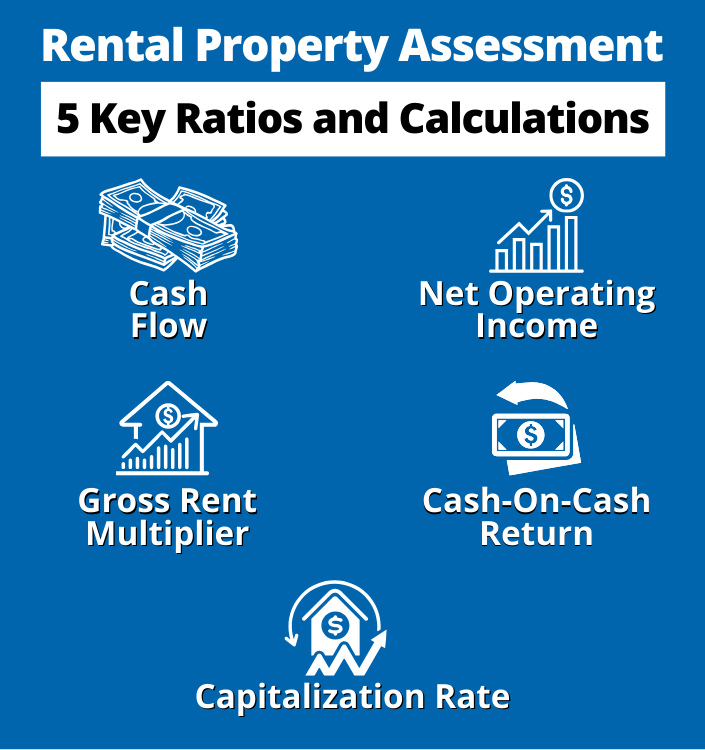
    5 Important Ratios & Calculations to Know.

    Buying and owning rental property is a proven way to successfully invest in real estate. Rentals can provide passive income, long-term appreciation, and solid tax benefits. Like many real estate investments, a key challenge is choosing the right, or profitable, property.

    Whether you’re considering single family, condos, or multifamily property, it’s important to review a property’s location for attributes that include areas with strong demand, flexible rental regulations, and reasonable property taxes.  

    Besides location, analyzing several key ratios and calculations can help determine whether a rental property has the potential to generate a profitable return. It’s important to keep in mind that real estate investors may use these and other metrics depending on their investment goals.  


    Cash Flow
    Cash flow is an easy way to evaluate how well a rental is performing. It shows how much net cash is left after rents are received minus expenses including mortgage payments.  
     
    -Formula: Cash Flow = Monthly Pre-Tax Rents minus Monthly Mortgage and Operating Expenses (utilities, maintenance, property taxes, and insurance).

    -Example:
    Monthly Rents, $2,500
    Minus
    Monthly Mortgage and Operating Expenses, $2,100
     = $400 Monthly Net Cash Flow

    Net Operating Income
    NOI measures the profitability of a rental not just its cash flow. It looks at rental income and operating expenses, except mortgage payments and income taxes, to evaluate how well a property performs as a stand-alone business.

    -Formula: Gross Rents minus Operating Expenses (utilities, maintenance, property taxes, and insurance):

    -Example:
    Gross Rents (Annual), $30,000
    Minus
    Operating Expenses, $6,000 ($500 X 12 months)
    = $24,000 NOI

    Gross Rent Multiplier
    GRM is the ratio of a property’s price compared to its annual rents. It determines how many years it would take to earn back what you invested using rental income. A lower GRM means it will take less time to pay off your rental, increasing profitability.

    -Formula: Gross Rent Multiplier = Property Price / Annual Gross Rents

    -Example:
    Property Price, $300,000
    Divided by
    Annual Gross Rents, $30,000
    =10
    In this example, it would take about 10 years in rents to pay off the property. GRM can range between 4 to 10, varying based on rentals in a specific market.

    Cash-on-Cash Return
    Measures cash income earned compared to the cash invested in a property. In general, the higher the percentage of cash-on-cash return, the better the investment.

    -Formula: Cash-on-Cash Return = Annual Pre-Tax Rents / Total Cash Invested

    -Example:
    Annual Pre-Tax Rents, $30,000
    Divided by
    Cash Invested in Property, $60,000 (20% down on a $300,000 condo)
    = 0.50 or 50% cash-on-cash return
    The investment generated a 50% return on the cash invested during the year.

    Capitalization Rate
    The cap rate determines the returns on the property without financing costs. This allows you to compare the estimated ROI on multiple properties, avoiding variations in down payment and financing scenarios. The higher the cap rate, the better the investment.

    -Formula: Cap Rate = Net Operating Income / Property Purchase Price (not including financing costs)  

    -Example:
    Determine Net Operating Income:
    Annual Rents, $30,000 ($2,500 a month X 12)
    Minus
    Operating Expenses (utilities, maintenance, property taxes, and insurance), $6,000 ($500 a month X 12)
    = $24,000 in NOI

    NOI ($24,000)
    Divided by
    Property Cost ($300,000)
    = 0.08 or 8% cap rate
    The cap rate for rentals can range from 4% to 12%, but can vary depending on an area’s market factors.

    Choosing a rental property is more than just comparing its purchase price and potential rents. Running these calculations is a critical part of a rental assessment, helping to maximize profit and reduce risk. A good rental can help generate healthy returns while a poor choice can drain your earnings and time. If you’re looking to invest in a rental, we can help calculate these ratios and explain financing options to help you achieve your investment goals. Contact us for details.

  • Rates Finally Easing: Is Now the Time to Buy?

    Rates Finally Easing: Is Now the Time to Buy?

    As we embark on 2024, we continue to expect a soft landing for the U.S. economy and a gradual easing in mortgage rates. The Federal Reserve has kept their benchmark Fed Funds rate steady since late last July. Experts think the Fed will hold steady once again in March and continue to monitor inflation data.

    The May Fed meeting is the one to really watch. Why? The Fed has to decide when to stop shrinking its balance sheet, which had ballooned by nearly $3 trillion during the pandemic as money was pumped into the economy, in part by buying up mortgage-backed securities, driving rates to record lows.

    In 2023, as the Fed has shrunk that balance sheet, rates have risen. The Fed’s balance sheet is almost back to pre-pandemic levels, so the Fed has to decide when to slow down the unwinding process, which should have a downward effect on rates. The strength of the economy this Spring will also play a role.

    Meanwhile as abnormally large spreads between the 30-year fixed rate mortgage and the yield on 10-year Treasury bonds continue to narrow towards historical levels, mortgage rates have eased. It’s not exactly a plunge, but rates in the 6.5% range, down from around 8% last October, have already had a welcome effect on affordability.

    Redfin reports that a budget that would have afforded a $416,000 home will now buy a $453,000 home, now that rates are lower. As a result, fence-sitting homebuyers are now wading into the market. “Home prices keep marching higher,” said National Association of Realtors® Chief Economist Lawrence Yun. “Only a dramatic rise in supply will dampen price appreciation.” It’s unlikely.

    While new-construction sales are expected to rise 13.9% in 2024, new homes account for only about 10% of sales, far outweighed by the number of Millennials and Gen-Z’ers hoping to enter the market.

    Another trend: Older homeowners with significant equity are downsizing but renting their old home instead of selling it. This actually takes a property out of the homeownership column.

    Waiting for rates to fall further may not be the best strategy for buyers. Keith Gumbinger of HSH Associates agrees. “More often it seems the case that home prices generally keep rising, so the goalposts for amassing a down payment keep moving.”

    The old adage “marry the house and date the rate,” may well apply. While you might not like the rate today, the housing market has almost always rewarded buyers over procrastinators — especially if rates trend downward, opening up future refinance opportunities. If you or someone you know are anxious to buy a home, let’s get that conversation started! Contact us today.

    Get the latest mortgage industry news. Click here.

    Copyright © 2024 Myers Capital Hawaii 

  • Mortgage Newsletter Spring 2024

    Mortgage Newsletter Spring 2024

    Get the latest mortgage industry news. Click here.


    – Economy & Mortgages: Rates Finally Easing: Is Now the Time to Buy?

    – Higher Conforming Loan Limits Creates Opportunities in 2024

    – The Best Mortgage? It’s Not Always What You’d Expect.  

    – Clash of the Generations: Millennials vs. Downsizing Boomers

    – What’s a Non-Warrantable Condo? And Can It Be Financed?

    Economy & Mortgages: Rates Finally Easing: Is Now the Time to Buy?


    Higher Conforming Loan Limits Creates Opportunities in 2024

    The FHFA’s conforming loan limit increase is based on a formula using home-price data in the third quarter of each year. Coming into 2023 we saw an increase of 12.21%. Housing prices nationally have risen at a slower pace in the face of higher interest rates, but still faster than the historical average.

    Accordingly, for 2024, the baseline Conforming loan limit for mortgages backed by Fannie Mae and Freddie Mac will rise by 5.5%. For 2024, the maximum Conforming loan is $766,550 in most markets, and up to $1,149,000 in high-cost markets.

    This annual increase can enable homeowners with “smaller” Jumbo loans to refinance into a Conforming loan, at often-better mortgage rates. It depends on when you got your old loan, it’s size, and the particular loan terms you have.

    There’s only one way to find out – – give us a call to see how we can potentially reduce the cost of your home financing!

    The Best Mortgage? It’s Not Always What You’d Expect.

    Despite doom-and-gloom headlines about high interest rates and tight supply, throughout 2023, millions of homes were still bought and sold, nationwide. As mortgage professionals, we spend hours comparing options to find the most affordable financing for our clients.

    The key metric we focus on is not the rate, and not the term, but the total interest cost of financing over the expected time our client actually anticipates staying in the home, or in the loan, rather than the official loan term of 15 or 30 years.

    We also strategize on the right downpayment amount — while borrowing less reduces the interest you pay over the life of the loan, the opportunity cost of tying up money in a down payment (versus, say, investing it elsewhere) may be a major consideration.

    Finally, we look at upfront costs and expected cash flows, how they relate to your expenses, and whether you might consider prepaying the mortgage aggressively to save more interest.

    While many buyers of course fit the standard 30-year fixed rate mortgage just fine, here are just some of the other choices clients have made:

    Rate Buydowns – This has been a popular option over the last year. For an upfront cost, there are usually options to reduce the rate for 1-3 years, or permanently. This usually works great for folks who know they’ll be in the loan for awhile, since the interest savings gradually recoup the upfront cost.

    Hybrid Loans with Fixed Initial Periods – For clients with shorter “expected terms”, hybrid adjustable-rate mortgages with five-year or seven-year fixed periods may match their financial plans better. The rates on these can be lower than a standard 30-year fixed rate loan.

    Fifteen-Year Fixed Rate Loans – With its significantly lower lifetime interest costs, this loan still makes sense for people with good cash flow.

    Low-Downpayment Loans – These are perfect for getting into the market with little or no money down — with conventional options as low as 3% down, FHA options at 3.5% down, and VA loans requiring no money down. It usually pencils out better to get in and enjoy home appreciation than to stay on the sidelines and watch prices (and your rent) rise while trying to amass 20% down.

    Renovation Financing – Different than construction loans, these loans are federally-backed and let you add the cost of renovation (say, to fix a worn roof, or upgrade windows, floors, etc.) to the value of the home, and borrow an amount that covers the upgrade as part of the purchase of the home!

    Right now these are fantastic solutions to the limited-inventory situation we’re seeing. You can buy an unloved property (sometimes for a nice discount) and make it your dream home – all in one go. And eager sellers will sometimes sweeten the deal in the process!

    Programs for non-traditional buyers and investors – There are a wide range of programs for self-employed borrowers, business owners, investors, and other non-traditional borrowers.

    Whatever you wish to accomplish in real estate in 2024, we can match you with the loan that best helps you achieve those goals, and at the lowest possible cost.

    Clash of the Generations: Millennials vs. Downsizing Boomers

    The knock on the Millennial generation has always been a lack of material aspirations — collecting experiences rather than “things.” Until recently, this seemed to extend to homeownership as well: fewer Millennials owned homes as they turned 30 than previous generations had (42% for Millennials, vs 48% for Gen X, vs 51% for Boomers).

    The reasons behind this may have been more economic that philosophical. Many came of age during the global recession. “The economic hardships encountered at the start of their adulthood, coupled with student debt, resulted in Millennials reaching homeownership later than other generations,” said Alexandra Both, a research analyst at the apartment list site RentCafe.

    But Millennials are now catching up. The average age of Millennials now matches the average age when people buy their first home, and they are putting intense pressure on the housing market.

    Ironically, COVID-19 has helped to boost Millennial homeownership rates. Student loan payment pauses and stimulus checks helped people’s finances. The work-from-home wave also made more-affordable, outlying communities popular. Buyers benefited from record-low interest rates. Now, in a generational head-on clash, Millennials are competing for homes with Baby Boomers, many of whom are downsizing into the same size properties Millennials hope to buy!

    Real estate industry analyst Meredith Whitney describes a “Silver Tsunami” of 10,000 Baby Boomers turning 65 daily as a challenge for Millennials. Whitney cites AARP data that “[about] 51% of people over 50 downsized their home. And people over 50 are 74% of total U.S. homeowners. So, if you just take half of that, you’ve got about 30 million homes that should be coming on the market.”

    “Should be…” is the key phrase. Multiple analysts point out that many Boomers are retiring in place, which freezes inventory. And others (as mentioned on page 1) are pulling equity out of their old home, using it to downsize, and renting out their old home.

    That takes a home out of the homeownership column and puts it in the rental column – certainly not good news for would-be Millennial homebuyers. We have clients going in both directions, of course. Whatever your plans, we look forward to leveraging our expertise and extensive loan options to help you achieve your current homeownership goals, or those of your family members!

    What’s a Non-Warrantable Condo? And Can It Be Financed?

    Condos are a natural option for many people, especially with home prices continually rising. If you’re on the hunt for a condo, you may run across “warrantable” or “non-warrantable” properties.

    Before you fall in love with a condo, it’s a good thing to check, since it will affect the range of financing options available. In a non-warrantable condo, you can’t access Conventional, FHA, VA, or USDA mortgages, so we have to find specialized programs. These can require larger down payments and potentially higher interest rates.

    Four key factors drive warrantability:

    Building ownership: A single person or entity cannot own over 20% of a complex’s units, otherwise a complex’s financial health is too dependent on the financial well-being of a single owner.

    Occupancy types: If over 50% of the units are investment properties (which often are less well-maintained), or over 35% is commercial space, that complex may be considered non-warrantable.

    Financial reserves: To be warrantable, the homeowners’ association must allocate at least 10% of its dues to a reserve for maintenance and emergencies, and less than 15% of owners must be in arrears.

    Legal risk: A condo building may be non-warrantable if the complex or its developer is involved in litigation, especially if the matter involves building safety, structural soundness, and habitability.

    A non-warrantable condo can still be a great investment, but it’s key to be aware of the financing hurdles. We can help you size those up and make a great decision.

    Copyright © 2024 Myers Capital Hawaii

  • Mortgage Myths and Misinformation Debunked

    Mortgage Myths and Misinformation Debunked

    It is always surprising to sit down with clients who are approaching home buying for the first time (or sometimes even a move-up buyer) to find them harboring old truths, myths, and misconceptions about how to finance a real estate purchase. Dispelling these is our first step in creating an educated, well-prepared borrower.  

    Here are the top mortgage myths, misinformation, and half-truths we often encounter:

    -“You need a 20% down payment.” This myth just refuses to die. Years ago, this may have been true, but certainly not today. There are government-backed loans that allow for as little as 0% down. The average first-time buyer only puts about 6-7% down these days.

    -“You need to find a home before you apply for a mortgage.” In fact, the opposite is the better strategy, if you wish to successfully compete in a tight market. Let’s get you preapproved first, with the property TBD, and you’ll know just how much home you can buy before you start shopping. A solid preapproval tells the seller that you can close the deal!

    -“Having to pay Private Mortgage Insurance (PMI) is bad.” Oddly, PMI is viewed by some as a “penalty” for not putting 20% down, and may be why the “you need 20%” myth persists! In truth, PMI enables buyers – especially first timers — to get into the real estate market with less money down. History shows that even with PMI, getting in sooner usually beats staying out and watching prices soar from the sidelines as you try to save up for an ever-more-expensive home.

    -“You need perfect credit.” Excellent credit does tend to win you a lower interest rate, but sterling credit is not mandatory. We often lend to borrowers with less-than-perfect credit.

    -“You can’t get a mortgage if you have student loan debt.” Myth. Lenders consider your student loan debt as a part of all your current debt obligations when determining your debt-to-income ratio, and there may even be options to restructure some or all of that debt.

    -“You need to be debt-free to get a mortgage.” This is never true, and pretty darn rare. Most clients have some form of other debt (credit card, car loans, student loans). Lenders consider your overall debt-to-income ratios when assessing your ability to make payments.

    -“You should plan to buy a home in the Spring, because that’s when the most homes are put up for sale.” Spring was once the peak home buying season, but less so today. There are great deals to be found year-round.

    -“The best deal is always a 30-year fixed mortgage.” Take off those blinders! It’s not always the best fit, so we help you compare dozens of programs, including ARMs, many of which have lower rates and – for your situation – may be more attractive from a cost standpoint.

    -“You can’t get a mortgage if you’re self-employed.” Not true! There are many mortgage programs for self-employed borrowers, retirees, and other non-traditional borrowers.

    Bring your questions and concerns to us. We have all the facts and can tell you the truth about exploring loan options. With our help, you will avoid mortgage myths and make the best decision for your financial future. Contact us for details on how you can purchase a home.

  • Conforming and FHA Loan Limits Boosted for 2024

    Conforming and FHA Loan Limits Boosted for 2024

    New 2024 loan limits for conforming mortgages have increased to $766,550 and $1,149,825 in high-cost areas like Hawaii. The Federal Housing Finance Agency (FHFA) recently announced these conforming loan limit amounts for residential mortgages to be acquired by Fannie Mae and Freddie Mac.

    The 2024 limits increased significantly due to the continuing rise in home prices. The new $766,550 baseline loan limit for one-unit properties is a hike of $40,350 from $726,200 for 2023.

    High-cost areas like Hawaii, Alaska, and locations in Virginia, have a new ceiling loan limit for one-unit properties of $1,149,825 versus $1,089,300 for 2023.

    Number of Units
    Baseline Limits
    High-Cost Area Limits
    One
    $766,550 
    $1,149,825
    Two
    $981,500
    $1,472,250
    Three
    $1,186,350
    $1,779,525
    Four
    $1,474,400
    $2,211,600


    For Federal Housing Authority (FHA) loans, the new 2024 conforming loan limit is $498,257, a $60,000 increase over the 2023 baseline. FHA loans have lower down payment and credit score requirements than conventional loans and are popular for first-time buyers.

    FHFA and FHA are required by federal law to adjust conforming loan limit values yearly to reflect changes in U.S. home prices. The conforming loan limit will rise by 5.56% in 2024 due to the FHFA House Price Index that determined the average U.S. home value increased by that amount between the third quarters of 2022 and 2023.

    2024 conforming loan limits are available by clicking here.

    2024 FHA conforming loan limits are available by clicking here.


    Benefits of Higher Loan Limits

    Home Buyers

    Lower Monthly Payment and Overall Loan Costs


    Purchasing a home with a conforming loan versus a higher-cost jumbo loan can lower your borrowing costs. Conforming loans generally have better interest rates, lower costs, and flexible down payment, credit, and qualification guidelines.

    Increased Purchasing Power
    Apply for a larger loan to buy a better home with a remodeled kitchen, extra bedroom, more space, or in a preferred location.


    Homeowners 

    Tap into more equity with a cash-out refinance
    Pay down debt, cover college tuition, or make home improvements.

    Refinance a Jumbo Loan
    If you have a jumbo loan with a balance near a new loan limit in your area, you may benefit by refinancing to a conforming loan.


    Ready to Discuss Your Mortgage Options?

    If you’re considering a new home purchase or refinance, reach out to our seasoned mortgage advisors to discuss your loan options. Call 808-566-6611 or request a no-obligation consultation. Click here

  • Have Rates Peaked? What’s Ahead for Home Buyers?

    Have Rates Peaked? What’s Ahead for Home Buyers?

    Economy & Mortgages
    Have Rates Peaked? What’s Ahead for Home Buyers? 

    The Mortgage Bankers Association held its big annual convention recently, and shared its two-year outlook about the economy and its impact on interest rates. In summary, with inflation expected to fall from the current 3.8% to 2% by the end of next year, the MBA doesn’t expect the Fed to hike interest rates further this year.

    “(The Fed is) already at a place where if they do nothing, and inflation holds or falls further from here, they’re going to be slowing the rate of growth, and the cumulative impact of the rate increases they’ve already made are not fully felt yet,” said Mike Fratantoni, MBA’s chief economist.

    The MBA’s baseline forecast is for mortgage rates to end 2024 at 6.1% and reach 5.5% at the end of 2025. That would be welcome news pointing to possible refinance opportunities for borrowers taking out mortgages at today’s rates.

    “As mortgage rates come down…borrowers will see less of a trade-off in moving,” said Joel Kan, the MBA’s Deputy Chief Economist. “I think that’s when you’re going to see more inventory free up,” Kan said. Low inventory has been sustaining home prices, even with the dramatic increase in interest rates. But don’t count on prices softening as inventory appears, though. If rates fall as expected, a rush of sidelined buyers may keep prices up. This is expected to be compounded by more first-time buyers appearing, with Millennials — the largest age cohort – already entering prime homeownership age.

    All this forecasting aside, what do homebuyers and sellers face today?

    With interest rates now slightly lower, but still near their highest point in more than 20 years, both buyers and sellers have to adjust their expectations. We help clients do this, by properly assessing and extending their financial horsepower through access to a wide range of innovative loan products.

    Another important adjustment has to do with the type of property you may be considering. We’re seeing “move-in” properties selling quickly while those needing upgrades are taking longer to sell.

    Properties that need some love are where savvy real estate buyers find opportunity!

    A seller listing one of these in this tough market is more likely to be a motivated seller (versus an opportunistic one) and may be open to a lower offer. Renovation loans are key strategic tools in turning these unloved properties into beautiful investments.  

    The bottom line is that opportunities exist throughout all market cycles. And it’s our mission to help you take advantage of those, quickly.

    Contact us today if you or someone you know is thinking about a purchase, and we’ll put together a winning plan. 

    Get the latest mortgage industry news. Click here.

    Copyright © 2023 Myers Capital Hawaii 

  • Mortgage Newsletter – Winter 2023

    Mortgage Newsletter – Winter 2023


    Get the latest mortgage industry news. Click here.


    Inside this edition:
    – Economy & Mortgages: Have Rates Peaked? What’s Ahead for Home Buyers?
    – Will Higher Rates Lead to Falling Home Prices? The Historical View.
    – Adding Value with Accessory Dwelling Units (ADU)

    – Why Now Could Actually End Up Looking Like a Good Time to Buy
    – What’s Great Credit Worth? We do the math!

    Economy & Mortgages: Have Rates Peaked? What’s Ahead for Home Buyers?


    Will Higher Rates Lead to Falling Home Prices? The Historical View.

    Is buying a home when rates are high a bad idea? Assuming you have to stretch that mortgage payment to get into a home, one thing you’d naturally be concerned with is the likelihood that home prices would fall right after you buy.

    While this is of course a possibility, it’s statistically unlikely. As it turns out, home prices don’t correlate well with mortgage rates. In fact, home prices tend to ignore mortgage rates most of the time.

    First, just because rates are high doesn’t mean home prices will tank. Look at the 1970’s (8.89% median interest rate), 1980’s (12.82% median interest rate), and 1990’s (7.88% median interest rate). According to Freddie Mac, year-over-year home prices only declined in the 1982-83 and 2007-09 periods.

    When you look at it on a monthly basis, the picture becomes even more clear. It’s actually rare for mortgage rates to rise and home prices to decline at the same time – only happening in 6 out of 365 months. This is because rates tend to rise when Fed policy drives up rates in general, in response to inflation (which usually coincides with strong economic growth, low unemployment and rising wages — which drives up home prices).

    The average homeowner keeps their home for around 13-14 years, a number that has steadily increased every year until recently, according to Redfin. When you consider that housing prices have fallen nationally in only 55 months in over 30 years, it’s likely that the average homeowner is coming out ahead, no matter when they buy.

    Certainly, savvy homebuyers know they must reset their expectations about financing costs over the next several months. But the prospect of continued home value appreciation due to limited supply, as well as the prospect of a refinance later on, can make a purchase strategy attractive — even with higher rates. How much of that potential appreciation are you willing to forego while waiting for rates to fall considerably? Let’s chat!

    Adding Value with Accessory Dwelling Units (ADU)

    We’ve written recently about the growing trend for adding Accessory Dwelling Units (ADUs) to the properties of single-family residences. We can report that government encouragement of ADUs keeps expanding to match the trend. In October, the U.S. Department of Housing and Urban Development (HUD) announced a new policy allowing homeowners “to use a portion of the actual or prospective rental income from an [ADU] to be added to the borrower’s effective income for purposes of qualifying for an FHA-insured mortgage.”

    The trend towards ADU construction for rental income, multi-generational families, work-from-home businesses, and other reasons means opportunity for many homeowners. If you have the space on your property to consider such a project, and have an interest in what it would take, set up a time with me to go through the ramifications in detail, so you can make a fully informed decision about it.

    Why Now Could Actually End Up Looking Like a Good Time to Buy

    With interest rates on some 30-year fixed rate mortgages hitting 8% this Fall, so many clients I speak with who are considering a home purchase (first time, as well as move-up) are naturally in shock when they consider the higher monthly payments that come with the territory today.

    Many prospective buyers are ready to throw in the towel, and retire to the sidelines until the storm passes and the coast is clear. But before doing so, it’s important to try to see the big picture.

    There are three big drivers in the market today which will probably continue to define the next few years in this industry.

    Inventory: Housing supply is and will continue to be the driving force behind prices. Tight supply has sustained home prices even with a doubling of interest rates. Housing upply will not catch up to demand for home for the foreseeable future. When demand exceeds supply, prices tend to rise.

    Demographics: The Millennial generation is 80 million strong, and now reaching the prime homebuying years. They’ve put off family formation longer than the previous generation, and are putting the most pressure on housing. That means first-time buyers will dominate the market. With limited inventory, this generational wave will continue to put upward pressure on prices.

    Mortgage rates: As mentioned on page 1, they’re expected to fall back into the 6% range in the months ahead. It’s likely that sidelined buyers will re-enter the market as this occurs, which will put upward pressure on prices as more buyers bid on existing inventory. Right now, high rates have sidelined many prospective buyers to wait, which means less competition – especially in the case of unloved properties!

    What it means…

    While it’s impossible to predict the future perfectly, the trends above are powerful tidal forces acting on our industry. For these reasons, buyers entering the market now — as tough as it seems today – may end up looking like winners.

    With a floor under prices, and less competition, there is more room for negotiation (especially on a home that needs an upgrade). Later on, if rates fall as expected, a possible refinance opportunity would exist, which would free up cash flow each month. To top it off, the many fence-sitters waiting for rates to fall would likely re-enter the market the minute the storm has passed and bid up prices with a new round of bidding wars against limited inventory. As one mortgage pro said, “You’ll have pandemonium.”

    So, even with high interest rates, buying now could end up looking like the better move, down the road. Rather than dither, call me, and let’s talk through your goals. We’ll find the loan options that will fit into your budget and get you house hunting while the hunting is good!

    What’s Great Credit Worth? (Answer: A lot.) We do the math!

    Now more than ever, with rates at elevated levels, a great credit score is worth the effort. We always say that we like to “do the math”. Well, here it is. While your financial profile and loan program will determine your rate, the general rule is that a better credit score helps you win a lower mortgage rate. The table below is based on a $300,000 mortgage, using national average mortgage rates from last month (*source: myFICO, October 2023). You can’t help but see a significant difference in monthly payment and lifetime interest costs!

    FICO Score*
    National Average Mortgage APR*
    Payment (Principal & Interest) on 30-Year Fixed
    Mortgage Interest Over 30 Years
    760-850
    7.479%
    $2,093
    $453,599
    700-759
    7.701%
    $2,139
    $470,071
    680-699
    7.878%
    $2,176
    $483,300
    660-679
    8.092%
    $2,221
    $499,403
    640-659
    8.522%
    $2,311
    $532,111
    620-639
    9.068%
    $2,429
    $574,282

    Rates as of 11/10/23 and can change without notice. Rates mentioned in articles are for illustrative purposes only.  All mortgage products, rates, terms and conditions are subject to credit and underwriting approval. Your actual payment obligation will be greater. Does not include additional costs such as taxes and insurance premiums. This is not a commitment to lend or extend credit. Additional requirements and restrictions apply. Company NMLS 1662480. Consult with your tax, legal and accounting advisors before engaging in any transaction.

    Like brushing and flossing, taking care of your credit score pays off in the long run! There are many ways to check your credit score for free, and you can get one free credit report from each of the major reporting companies (Experian, TransUnion, and Equifax) annually. Want more information on how to boost your score? Contact us, and we’ll provide guidance anytime!

    Copyright © 2023 Myers Capital Hawaii